Quebec Surficial Mineralization Hub
A world first, right here in Canada.
Thetford Mines shaped Quebec’s industry for over a century. Now it has a chance to shape how Canada removes carbon from the atmosphere. Carbon Removal Canada, Frontier, and the DuGrisAuVert ecosystem are working to make that happen.
A New Chapter for a Historic Mining Town
Over 800 megatonnes of mine tailings sit in Quebec, and for decades that material was an environmental liability.
However, today, it has become the foundation of the world’s first surficial mineralization hub.
Research suggests that commercial projects developed here could remove between 400 and 700 megatonnes of carbon, representing between $60 and $175 billion in potential value.
Carbon Removal Canada and Frontier are launching this hub in partnership with the DuGrisAuVert ecosystem to advance a made-in-Quebec solution with global implications.
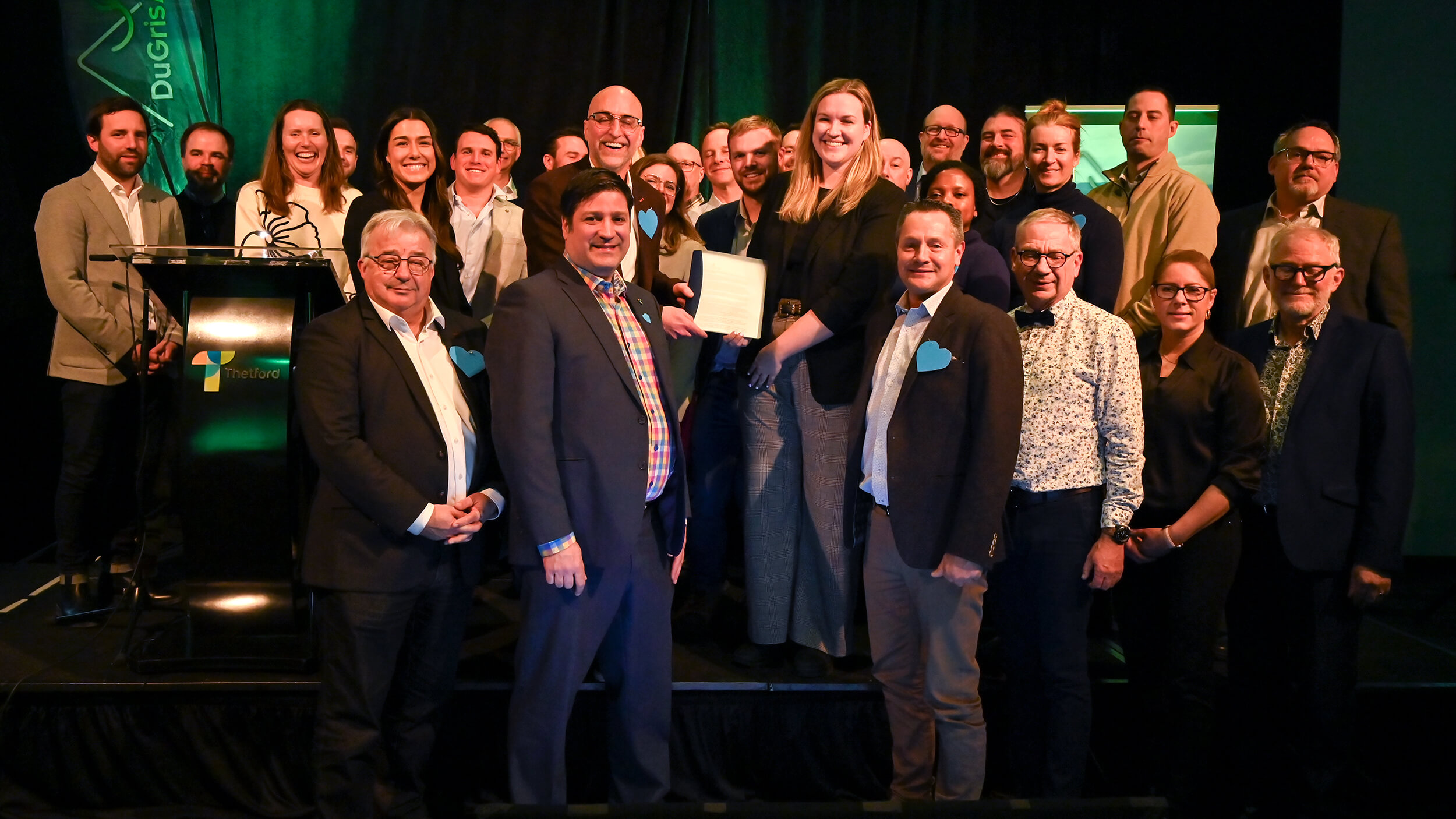
Leaders from DuGrisAuVert, the 3R Coalia–Kemitek consortium, City of Thetford Mines, and MRC des Appalaches regional council, amongst others, present Carbon Removal Canada with a Letter of Support for the Quebec Surficial Mineralization Hub.
While Frontier will provide R&D grants, alongside prepurchases for successful applicants, Carbon Removal Canada will serve as the facilitator of the Hub and will employ a dedicated Director to lead Hub management, partner coordination, and knowledge mobilization
The hub will host research, development, and demonstration projects at a site where common barriers for surficial mineralization have already been addressed: permitted land, established community relationships, mine tailings as accessible feedstock, and shared equipment for processing, measurement, and monitoring.
Apply Today
Frontier is now accepting project proposals from companies and research teams ready to demonstrate surficial mineralization at this site.
Successful applicants will receive
- R&D grants or pre-purchases to support project development.
"
Thetford Mines has carried the weight of Canada’s industrial legacy for generations. Today, that same geology becomes the foundation for something the world has never seen. This hub will help prove that carbon removal is not a distant promise. It is happening now, in Canada, with the community behind it.
Na’im Merchant, Executive Director, Carbon Removal Canada
What’s Carbon Mineralization?
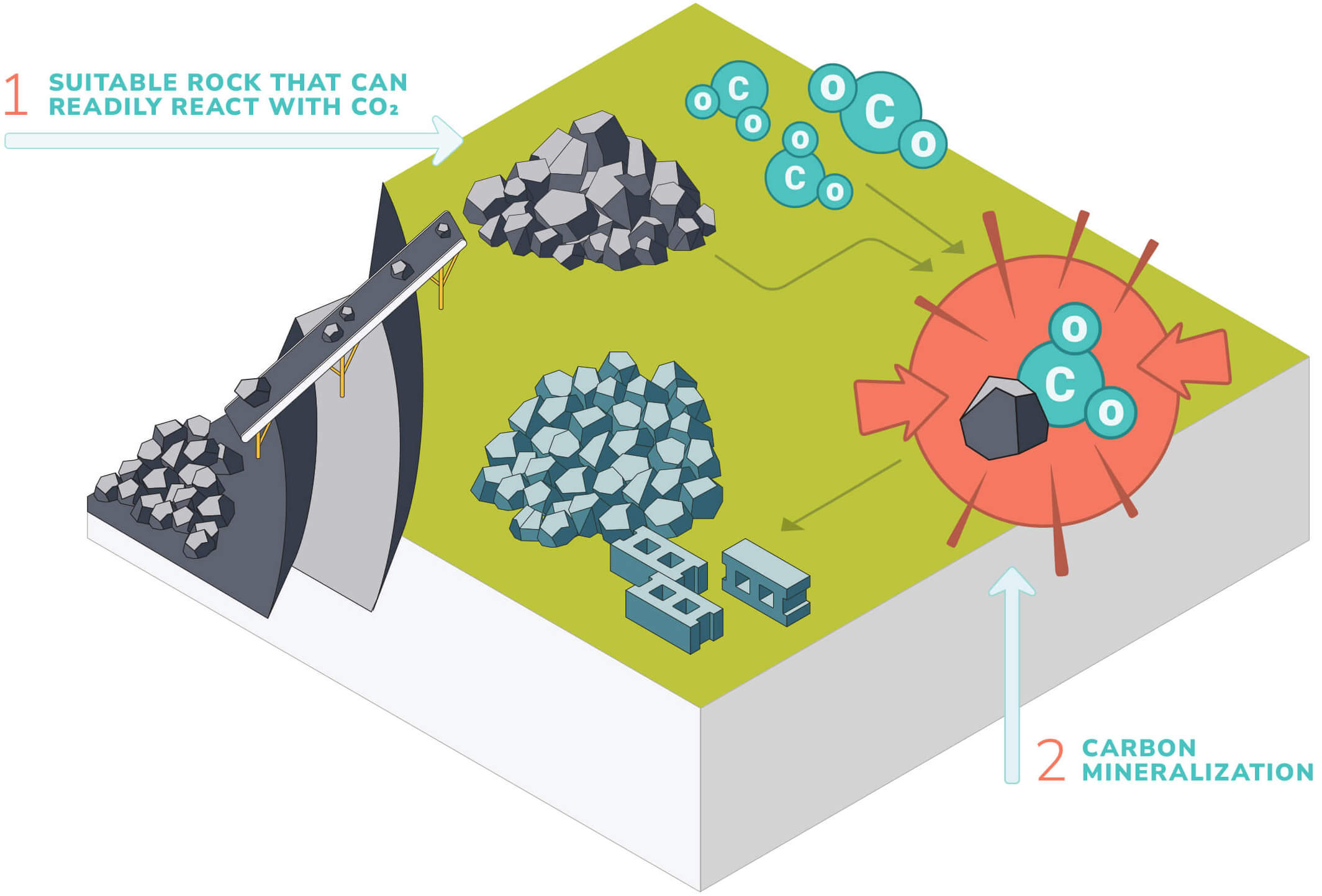
Canada can remove carbon from the atmosphere while cleaning up its mine tailings and industrial waste. When CO2 comes into contact with certain minerals, found in particular mine tailings and industrial byproducts, a reaction occurs that permanently turns the carbon into stone.
SURFICIAL MINERALIZATION
What makes surficial mineralization different is where the reaction happens. Rather than injecting CO2 underground, surficial mineralization works with material that is already on the surface: crushed rock or mine tailings. No drilling or subsurface infrastructure is needed, which can lower costs.
Co-Benefits of Carbon Mineralization

RECOVER CRITICAL MINERALS
The carbon mineralization process can extract additional critical minerals from tailings, turning waste into another revenue stream.
CLEAN UP MINE TAILINGS
Carbon mineralization stores carbon from the atmosphere in the mine tailings, which also neutralizes the tailing’s toxicity.
FAQ
What is the Quebec Surficial Mineralization Hub?
It is the world’s first hub dedicated to demonstrating surficial mineralization technology. Located in Thetford Mines, Quebec, it gives project proponents dedicated access to asbestos mine tailings as feedstock, a physical location to deploy and test their projects, and access to shared measurement and monitoring equipment.
Why a surficial mineralization hub?
The world needs carbon removal technologies that can scale to billions of tonnes, at an affordable cost. Surficial mineralization is one technology that potentially meets these requirements in the near-term, and Canada’s mining industry equips us with the potential to lead.
Frontier projects surficial mineralization can reach less than $80/tonne at scale, but reaching scale requires field-validated performance data from real projects. We believe that the Hub can lower the cost of demonstration projects, which in turn will have real impact on the number of projects, their results, and our progress to a commercial-scale carbon removal sector.
Who is behind this initiative?
The centre is a partnership between Carbon Removal Canada and Frontier, with the support of local partners, including the DuGrisAuVert ecosystem and the 3R Coalia–Kemitek consortium . It brings together national policy expertise, serious buyer demand, and deep local commitment.
Who can apply?
Any company, startup, or research institution with relevant technology or capacity is encouraged to apply. Frontier is looking for organizations serious about developing carbon mineralization projects with long-term commercial potential in Canada. You do not need to be based in Quebec or Canada to apply, but projects must be developed at the Thetford Mines site.
What does the application process look like?
Applicants submit a project proposal through Frontier’s online portal. Proposals are reviewed against the criteria outlined in the full RFP. Successful applicants will be contacted to move into the next stage of the process.
When does the RFP close?
Frontier is accepting applications until May 22, 2026. Review the full RFP for all deadlines and submission requirements.
I have more questions. Who can I contact?
Reach out to us at info@carbonremoval.ca.
Be part of Canada’s carbon removal movement
Subscribe to our monthly newsletter and stay ahead of the carbon removal curve with events, news, and opportunities to make a difference.