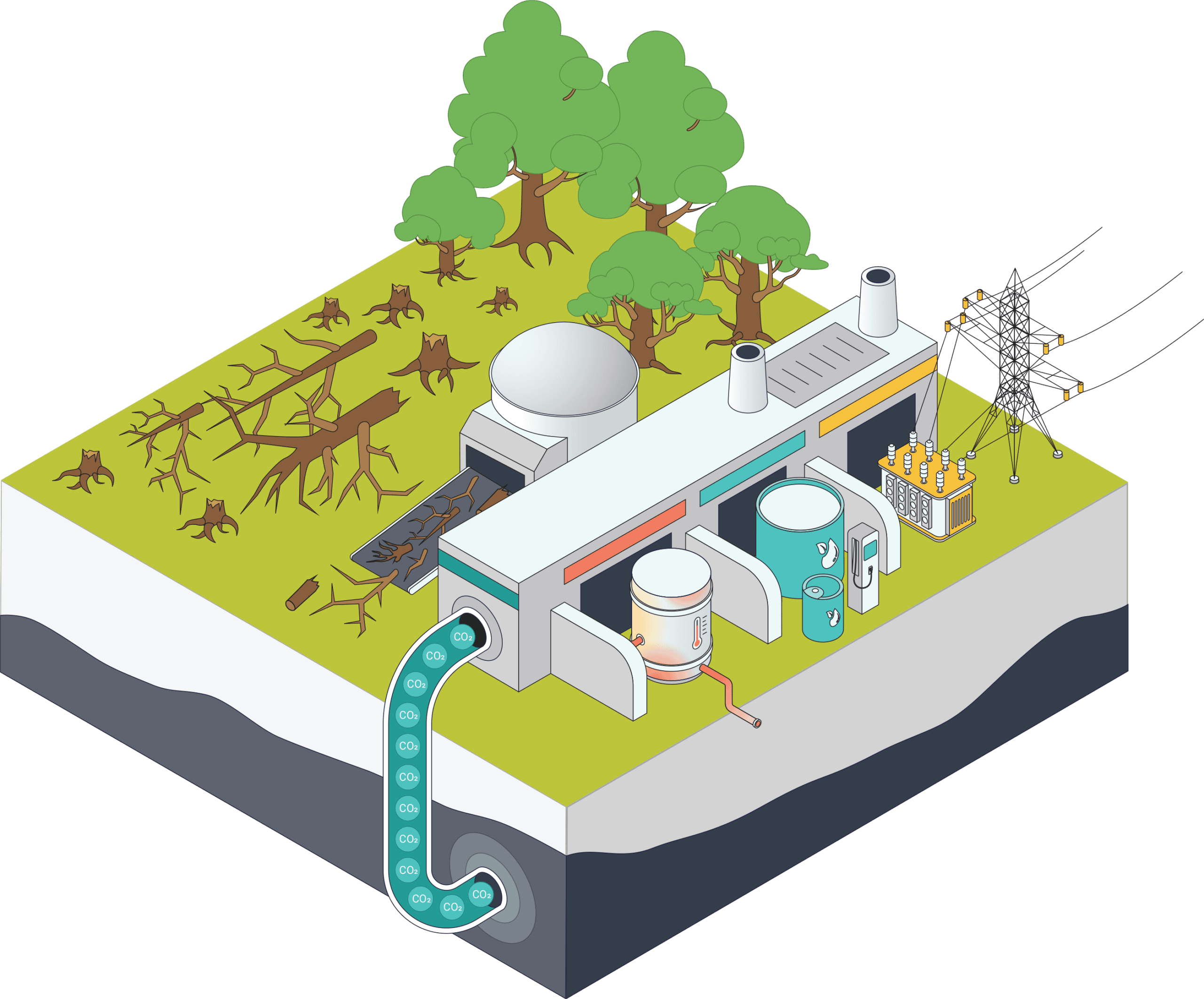
Sustainable biomass (forestry & agricultural waste).
This is the expanded view of tooltip for #1. That carbon needs to be stored somewhere, and Canada has world-class options. It can be permanently stored deep underground in
Process the biomass into electricity, heat, or fuel.
This is the expanded view of tooltip for #2
Clean electricity for our grid, heat to warm our homes, and fuel for transportation.
This is the expanded view of tooltip for #3
Store the captured CO2.
This is the expanded view of tooltip for #4

Click hotspots
for more information
How does Bioenergy with Carbon Capture and Storage work?
Plant materials like dead trees, crop leftovers, and agricultural waste naturally absorb CO2 as they grow. Bioenergy with carbon capture and storage (BECCS) means that instead of letting this organic matter rot and release that carbon back into the air, we can burn it to produce electricity, heat, or fuel.
Normally, burning anything for energy adds CO2 to the atmosphere. However, carbon capture technology can prevent these emissions from being released. Because these organic materials absorb carbon from the atmosphere through photosynthesis while growing, capturing the emissions released during their combustion removes carbon from the atmosphere permanently.
We can leverage Canada’s forestry and agricultural industries to keep the lights on, feed our families, and clean up the atmosphere.
Co-Benefits from BECCS

Energy Security
BECCS generates renewable energy that can supply reliable, continuous baseload power.

Wildfire Risk Reduction
BECCS turns a wildfire hazard into an energy resource, as it removes and utilizes forest waste that would otherwise intensify fires and threaten communities.
Industries Supported

Farming
Tk

Construction
Tk

Forestry
Tk
Project snapshot
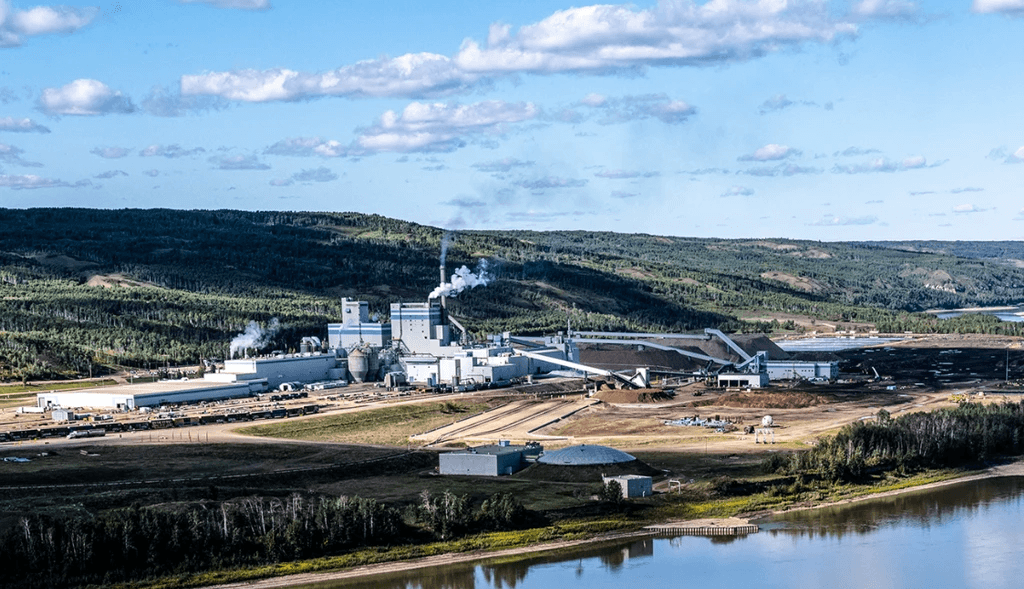
Peace River Pulp Mill Demonstration
Meadow Lake, SK
North Star will capture carbon from the Meadow Lake Tribal Council’s Bioenergy Centre and store it permanently underground. Microsoft has agreed to buy 626,000 tonnes of credits from the project over 15 years,, with commercial operation targeted for 2029.
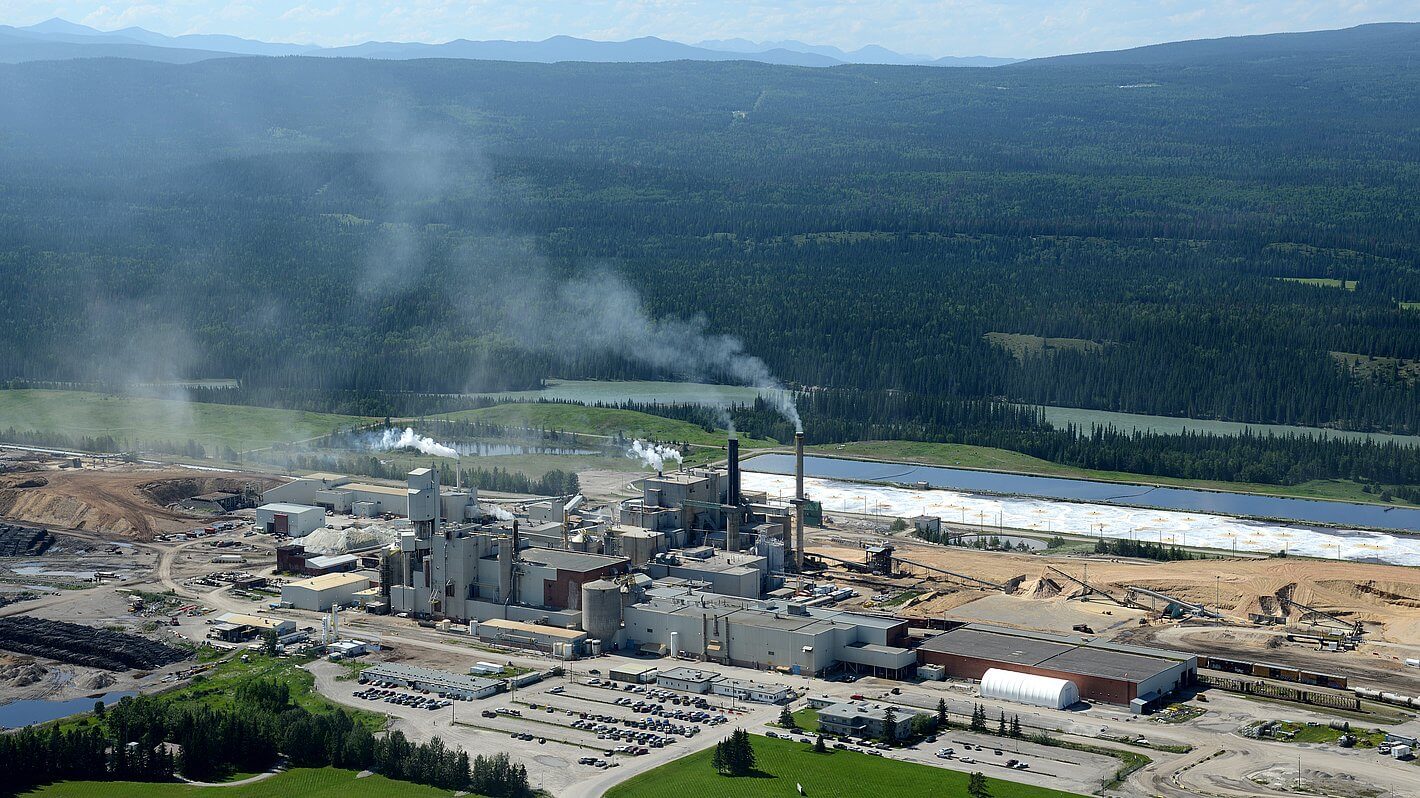
Hinton Pulp Mill
Hinton, AB
Vault 44.01 is developing a project to capture and permanently store carbon from West Fraser’s Hinton Pulp Mill. At scale, the project is targeting 1.3 million tonnes of carbon removed per year.