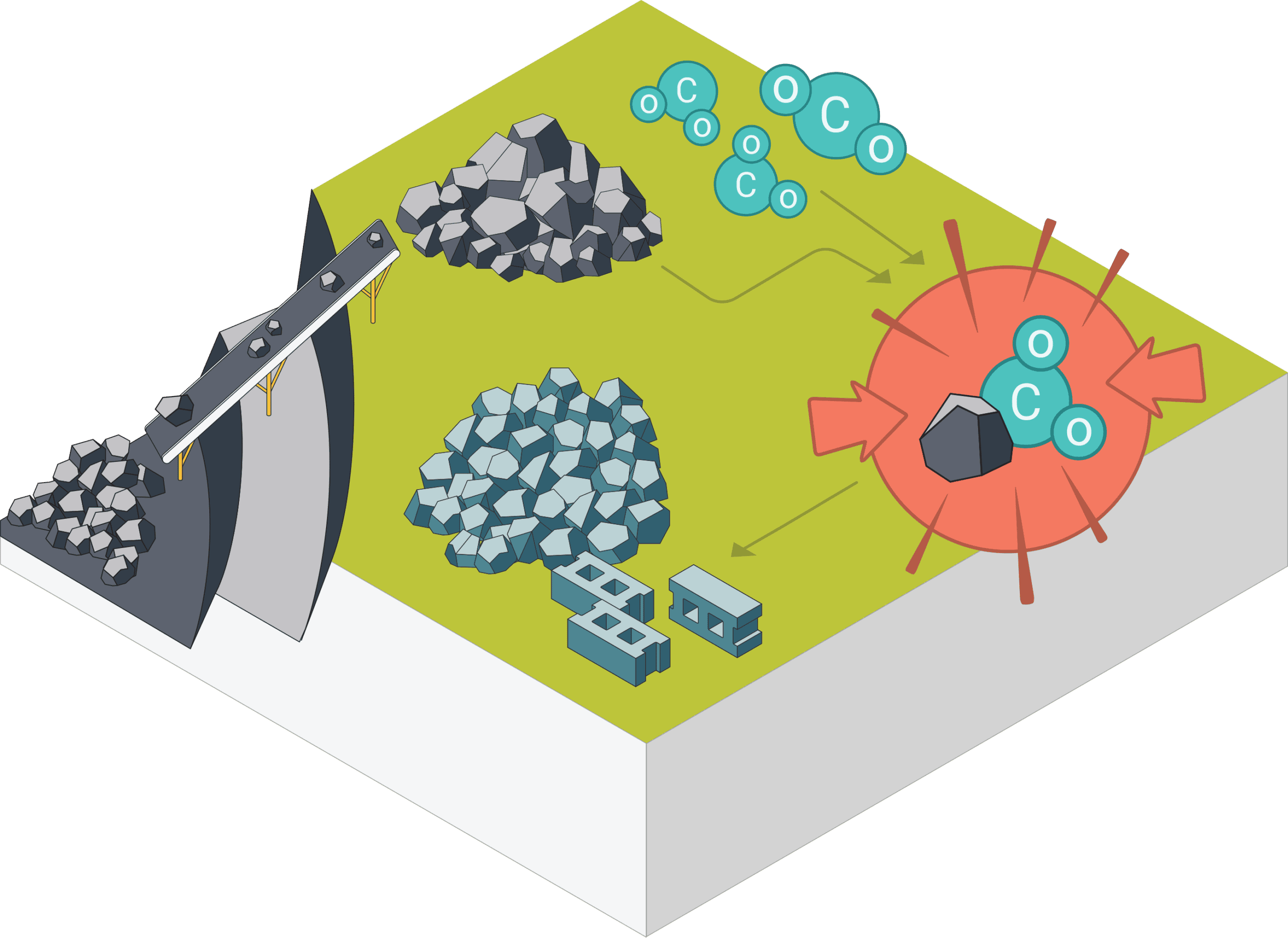
Suitable rock that can readily react with CO2.
This is the expanded view of tooltip for #1. That carbon needs to be stored somewhere, and Canada has world-class options. It can be permanently stored deep underground in
Carbon mineralization process.
This is the expanded view of tooltip for #2
Carbon is transformed into a rock permanently, or can be stored in building products.
This is the expanded view of tooltip for #3

Click hotspots
for more information
How does Carbon Mineralization work?
Canada can remove carbon from the atmosphere while cleaning up its mine tailings and industrial waste. When CO2 comes into contact with certain minerals, found in mine tailings and industrial byproducts, a chemical reaction occurs that permanently turns the carbon into stone.
The technology mimics what Earth does naturally over millions of years with rocks like basalt and magnesium-rich minerals that react with CO2 . This process can take place aboveground using mine tailings, underground using natural rock formations, or at industrial facilities. By crushing these minerals into fine particles or injecting CO2 into reactive rock formations, we can achieve the same permanent storage in weeks instead of millennia.
As an added benefit, the carbon mineralization process can extract valuable critical minerals like nickel, cobalt, and rare earth elements from mine tailings. This creates a new revenue stream where mines can be paid for carbon removal while also recovering minerals essential for electric vehicles, batteries, and clean energy technologies that would otherwise be wasted.
Co-Benefits from Carbon Mineralization

Recover Critical Minerals
The carbon mineralization process can extract additional critical minerals from tailings, turning waste into another revenue stream.

Clean Up Mine Tailings
Carbon mineralization stores carbon from the atmosphere in the mine tailings, which also neutralizes the tailing’s toxicity.
Industries Supported
Mining
Tk
Construction
Tk

Steel
Tk
Project snapshot
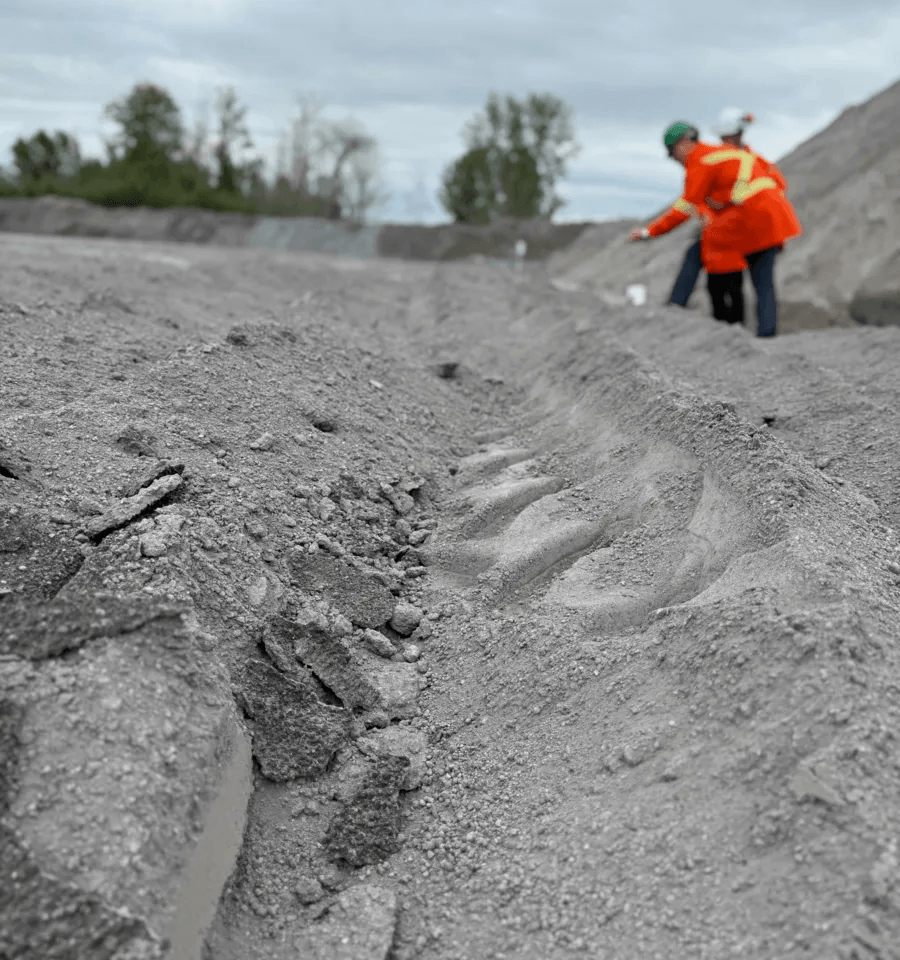
Algoma & Contrecoeur CDR
Sault Ste. Marie, ON & Contrecoeur, QC
Karbonetiq spreads steel slag, an unavoidable leftover from the steelmaking process, into thin, aerated layers so it reacts with air and permanently locks CO2 away as solid rock. Both of its Canadian sites are running: the Contrecoeur, QC plant went live in 2025, and the Algoma site in Sault Ste. Marie, ON is now removing an estimated 35,000 tonnes a year.
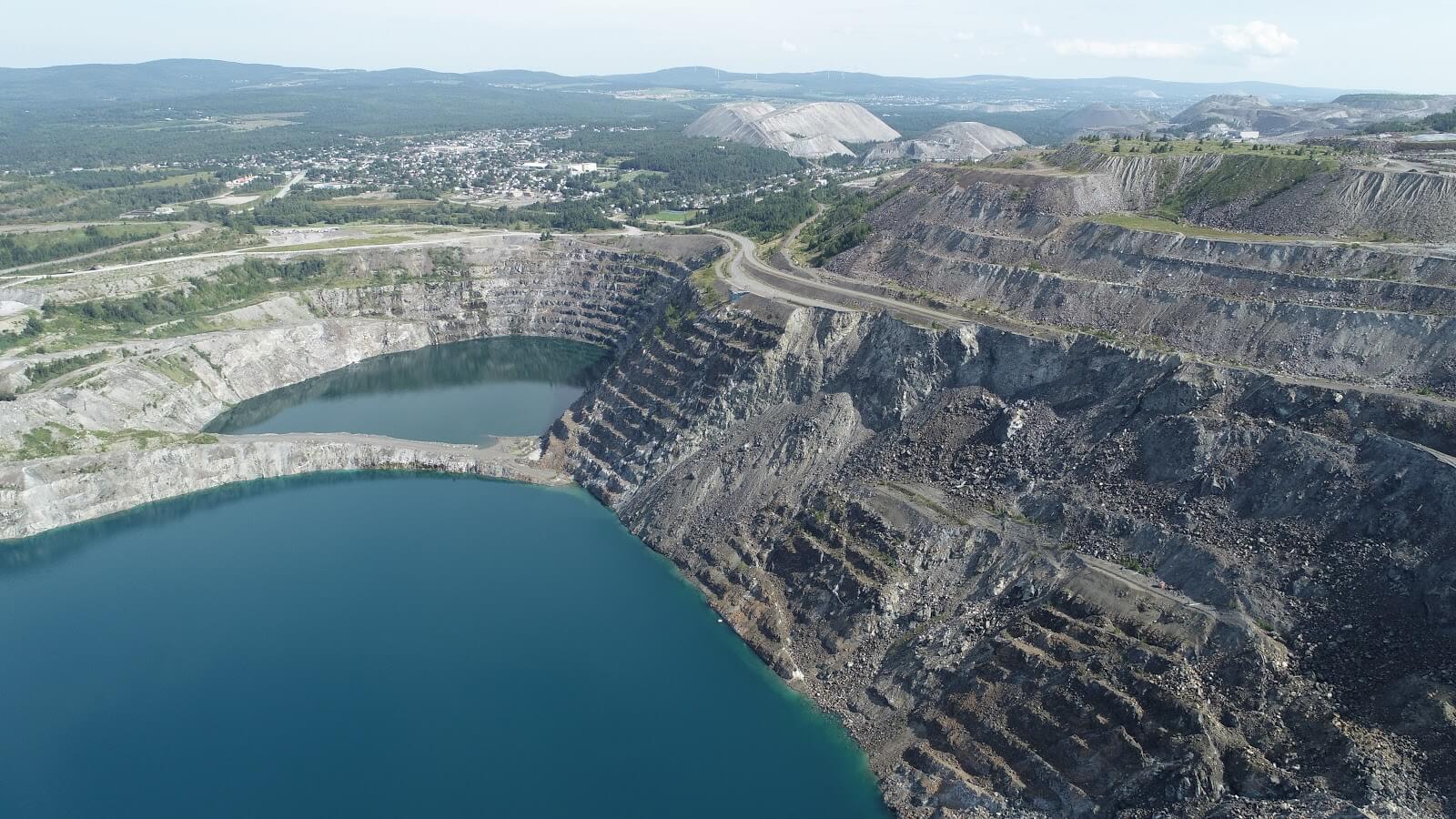
Quebec Surficial Mineralization Hub
Thetford Mines, QC
Launched in April 2026, this is the world’s first hub dedicated to surficial mineralization, turning decades of asbestos mine tailings into permanent carbon storage at the surface, with no drilling required. Through a partnership with Carbon Removal Canada, Frontier is backing project applicants with R&D grants and prepurchases as part of its $1 billion advance market commitment, giving developers access to feedstock, stakeholder relationships, regulatory guidance, and a path to commercial offtakes.