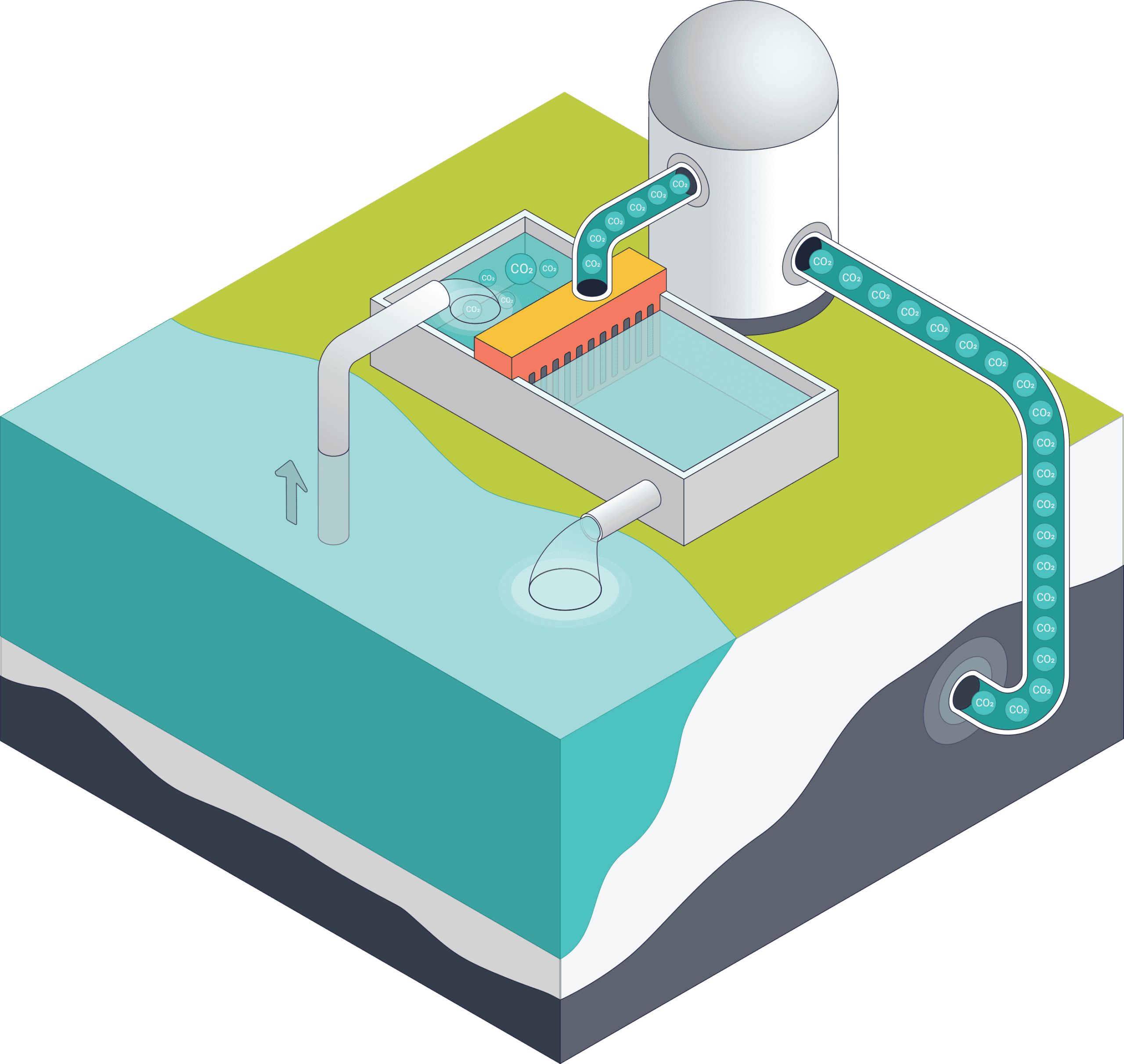
Pump Seawater into a Separation Unit
Seawater is drawn into a processing facility to begin the removal process.
Extract and Concentrate the Carbon
The ocean is the world’s largest carbon sink, and all the carbon it has absorbed has left it increasingly acidic. Technology separates the dissolved carbon out of the seawater, often using electrochemical processes or shifts in pH to draw it out as a concentrated stream.
Store the Carbon Permanently
The removed carbon is locked away for good, whether by being injected into geological formations underground or turned into stable materials, like concrete.
Return Treated Water to the Ocean
The treated water, now stripped of its excess carbon, flows back into the sea, where it can absorb carbon from the atmosphere again and help reverse ocean acidification.

Click hotspots
for more information
How does Direct Ocean Removal work?
The ocean naturally absorbs CO2 from the atmosphere like a giant sponge. While this helps reduce carbon in the air, it makes seawater more acidic, which endangers marine life and threatens fisheries. Direct Ocean Removal (DOR) reverses this damage while removing carbon for storage.
DOR technologies work like sophisticated water filters. They extract dissolved CO2 then either store the carbon deep underground in geological formations or convert it into useful products. Once the treated water flows back into the ocean, it can absorb fresh CO2 from the atmosphere, creating a continuous removal cycle.
This approach does double duty: it cleans up acidified waters to protect marine ecosystems, while also permanently removing carbon from the atmosphere. Healthier oceans mean healthier fisheries and stronger coastal communities that depend on them.
DOR offers Canada a chance to protect marine resources worth billions to our economy while building a new industry. The technology leverages Canada’s existing water treatment expertise and underground storage capabilities, creating economic returns from safeguarding our oceans and the communities that rely on them.
Co-Benefits from DOR

Restore Fish Habitats
DOR’s reduces ocean acidification, which is key to restoring marine ecosystems. This restoration facilitates the return, breeding, and rebuilding of salmon and other marine populations.

Rural Community Job Creation
DOR’s flexibility in site location makes it ideal for rural economic development, creating jobs in communities across Canada.
Industries Supported

Fishing
By returning deacidified water to the sea, direct ocean removal helps reverse the acidification that damages fish stocks, shellfish, and coral reefs, supporting healthier and more productive fisheries.
Renewable Fuels
The concentrated carbon removed from seawater can serve as a feedstock for synthetic and renewable fuels. The electrochemical processes used to extract it also generate clean hydrogen as a byproduct, giving the industry a second low-carbon input for sale.