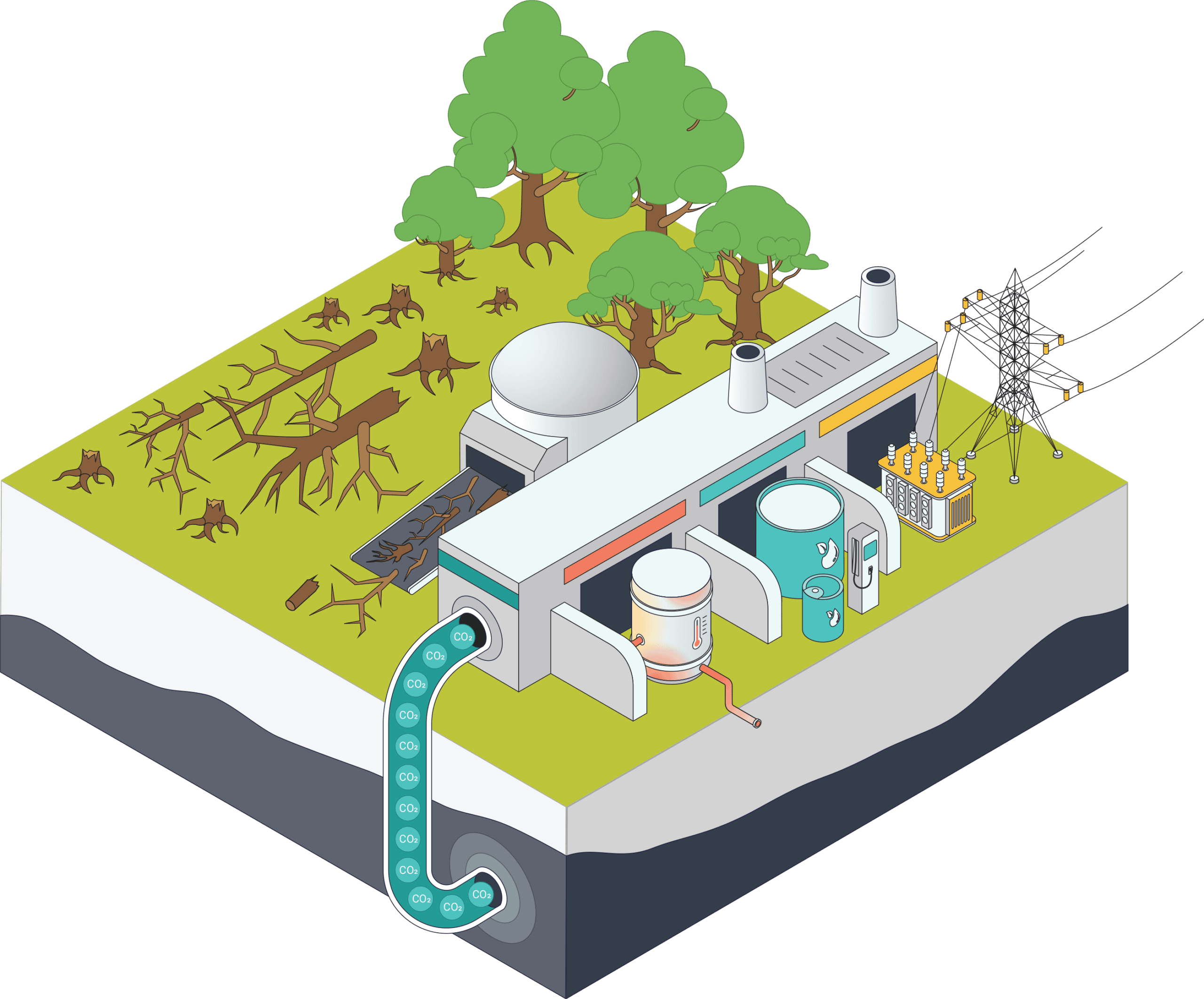
Collect Sustainable Biomass
Waste products like sawdust from a mill, dead trees, extra wood, or leftover crops are collected sustainably. These all contain carbon that would normally be re-released if they were left to rot.
Convert the Biomass into Energy
The biomass is burned or otherwise processed at a facility to generate electricity, heat, or fuel. The carbon is captured before it is released.
Create Clean Electricity
Because the carbon released during energy production is captured and stored rather than emitted, the electricity delivered to the grid is effectively carbon-negative, powering homes and businesses while removing carbon from the atmosphere.
Store the Captured Carbon
The carbon is injected deep underground into geological formations, such as depleted oil and gas reservoirs or saline aquifers, where it stays locked away permanently.

Click hotspots
for more information
How does Bioenergy with Carbon Capture and Storage work?
Plant materials like dead trees, crop leftovers, and agricultural waste naturally absorb CO2 as they grow. Bioenergy with carbon capture and storage (BECCS) means that instead of letting this organic matter rot and release that carbon back into the air, we can burn it to produce electricity, heat, or fuel.
Normally, burning anything for energy adds CO2 to the atmosphere. However, carbon capture technology can prevent these emissions from being released. Because these organic materials absorb carbon from the atmosphere through photosynthesis while growing, capturing the emissions released during their combustion removes carbon from the atmosphere permanently.
We can leverage Canada’s forestry and agricultural industries to keep the lights on, feed our families, and clean up the atmosphere.
Co-Benefits from BECCS

Energy Security
BECCS generates renewable energy that can supply reliable, continuous baseload power.

Wildfire Risk Reduction
BECCS turns a wildfire hazard into an energy resource, as it removes and utilizes forest waste that would otherwise intensify fires and threaten communities.
Industries Supported

Farming
BECCS gives farmers a new revenue stream from crop residues that would otherwise be left to decay, while creating jobs in collecting and handling that material.
Forestry
BECCS turns sawdust, dead trees, and woody waste into a saleable product for the forestry sector, generating new income and jobs from material that would otherwise rot on the forest floor.
Project snapshot
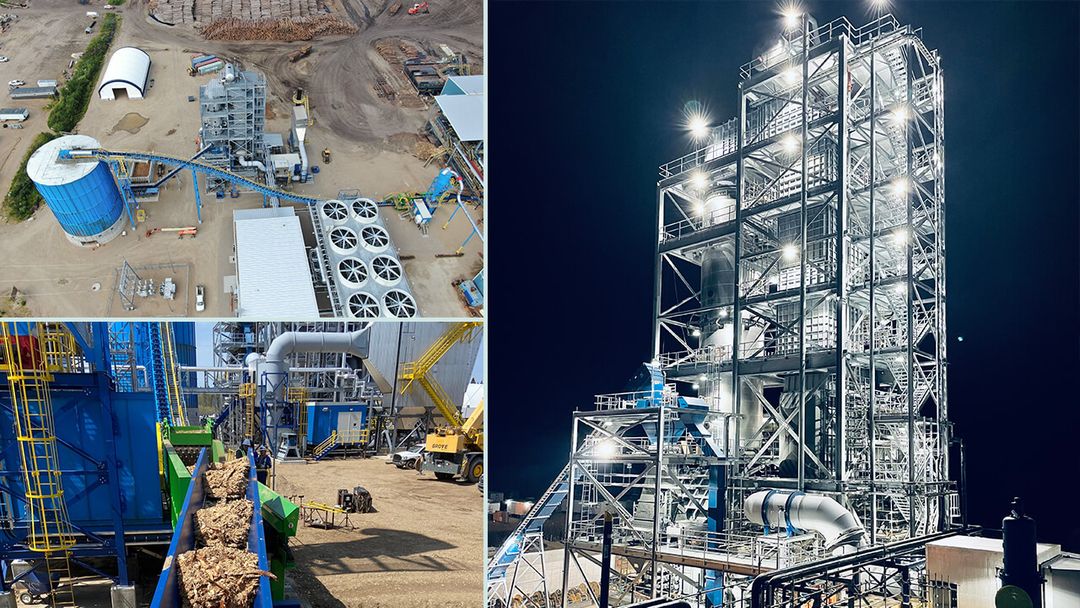
North Star
Meadow Lake, SK
North Star is Canada’s first majority Indigenous-owned high-quality carbon dioxide removal project, combining carbon capture and storage with the existing MLTC Bioenergy Centre.
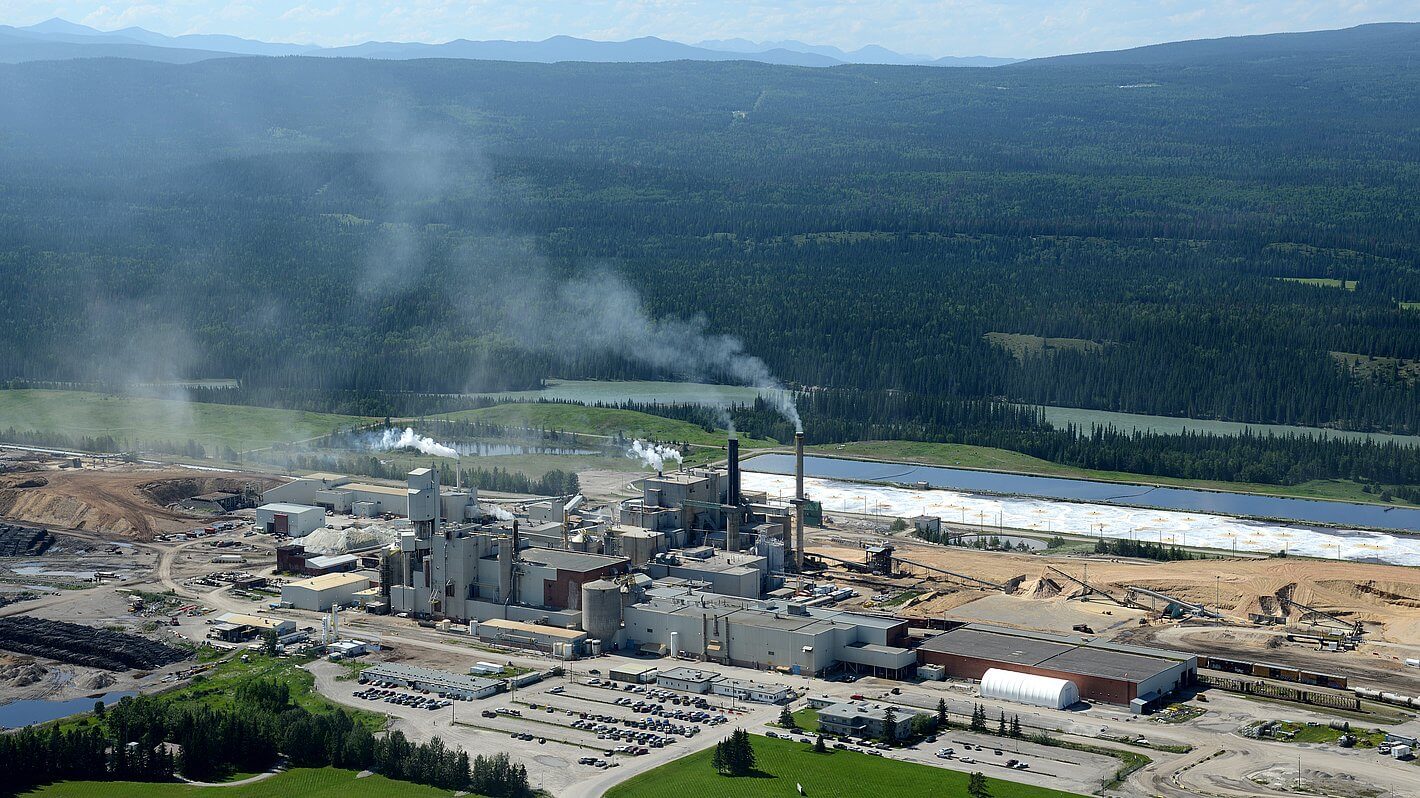
Hinton Pulp Mill
Hinton, AB
Vault 44.01 is developing a project to capture and permanently store carbon from Mondi’s Hinton Pulp Mill. At scale, the project is targeting 1.6 million tonnes of carbon removed per year.